



Maurice River Township Marsh Restoration

Restoring wetlands. Supporting wildlife. Strengthening our region.
This restoration site is part of PSEG’s Estuary Enhancement Program (EEP) — a long-term effort to restore and strengthen tidal wetlands along the Delaware Estuary.
Working with scientists, environmental organizations, regulators and local communities, the program focuses on restoring marsh habitat, improving aquatic ecosystems and supporting the long-term health of the estuary.
Through restoration projects like this one, the EEP helps expand habitat for fish and wildlife, encourage the return of native marsh vegetation and reconnect wetlands with natural tidal processes.
Learn more about the Estuary Enhancement Program and restoration efforts across the Delaware Estuary.
Overview
Located in Cumberland County, New Jersey, the Maurice River Township Salt Hay Farm Wetland Restoration Site is a 1,396-acre site that includes a wetland restoration area of 1,135 acres. Historically, a large portion of the farming area was vegetated with salt hay grass. As early as 1810, perimeter dikes were constructed and water control structures were installed to eliminate normal tidal inundation across the area.
Large stands of Phragmites were present prior to restoration activities. Wetland enhancement and restoration efforts began in 1996 and were completed in 1998. Within four years of construction completion, the restored marsh was indistinguishable in function and appearance from natural marsh.
Restoration goals
Enhancement and restoration efforts for the site focused on:
- restoring tidal flow and drainage
- expanding spawning and nursery habitat for aquatic species
- allowing Spartina and other desirable marsh plants to re-vegetate
- preserving wetlands and the surrounding upland buffer
Actions taken
To achieve these goals, the Estuary Enhancement Program implemented restoration measures across the site, including:
- constructing channels and inlets
- restoring normal tidal flow to promote the natural re-vegetation of Spartina and other desirable marsh plants
- creating high marsh habitat
These actions restored natural hydrology and created conditions that allow native marsh vegetation to expand across the site.
Restoration results
Restoration efforts produced measurable ecological improvements, including:
- 1,135 acres of aquatic habitat added to the Delaware Estuary
- rapid re-vegetation by desirable plant species, meeting final success criteria in 2001
- documentation of the natural formation of small channels within the restoration site
- establishment of additional habitat for horseshoe crab spawning
Public access and site enhancements
Enhancements were also completed to support environmental education, recreation and long-term public use of the site, including:
- boat launch
- two parking areas
- observation platform
-
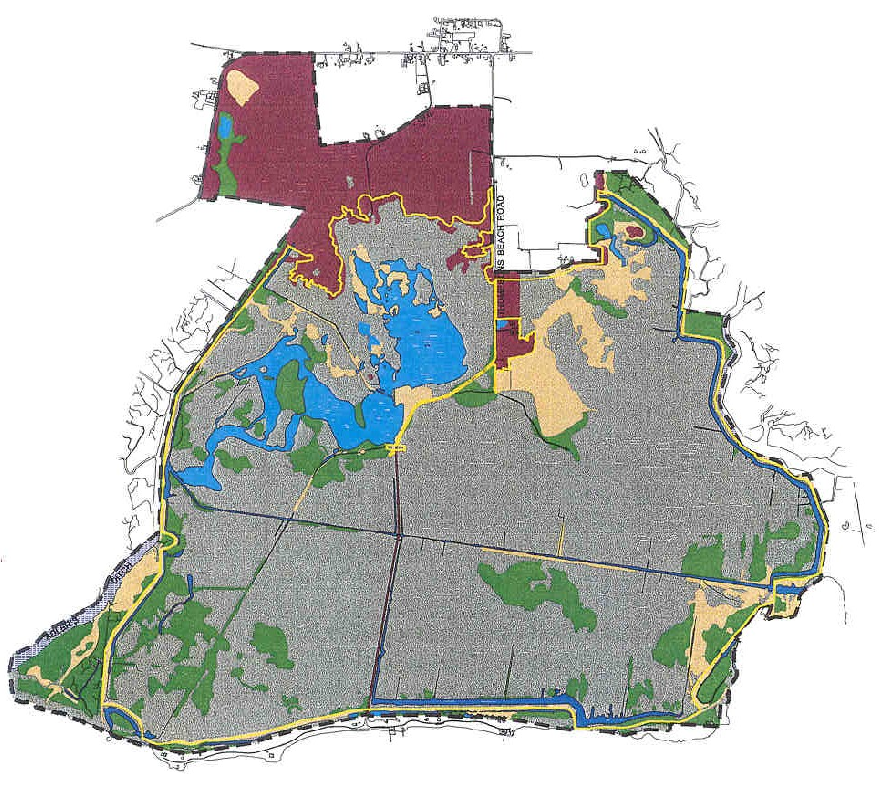
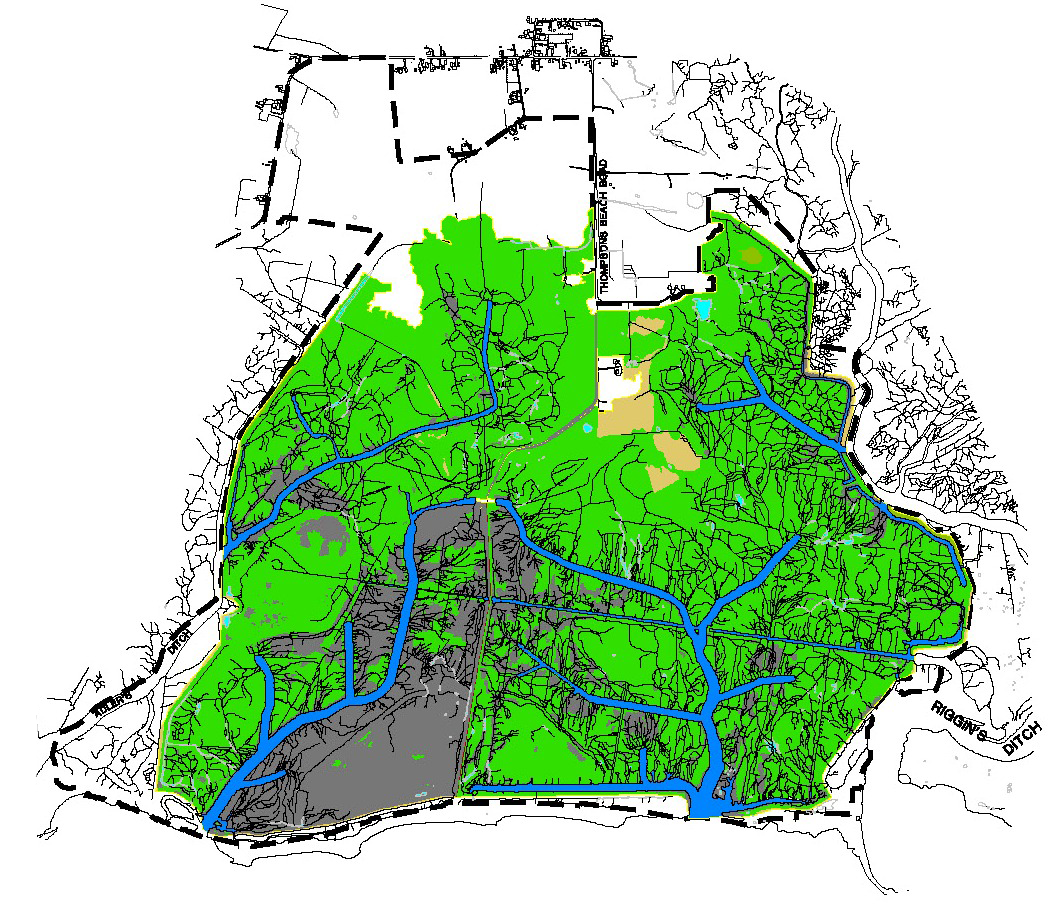
Prior to restoration activities, much of the site consisted of unvegetated marsh plain. Limited coverage of Phragmites and desirable marsh vegetation was present. Construction of tidal channels re-established normal tidal flow, increased drainage density and allowed Spartina to flourish across the marsh.
Before restoration (1996)
Prior to restoration, Spartina and Phragmites were present along the perimeter of the site and adjacent to ponded water. However, most of the area consisted of non-vegetated marsh plain.
After restoration (2004)
Following the construction of channels and the restoration of tidal flow, the spread of Phragmites was controlled and Spartina repopulated much of the formerly unvegetated marsh plain.