



Dennis Township Marsh Restoration

Restoring wetlands. Supporting wildlife. Strengthening our region.
This restoration site is part of PSEG’s Estuary Enhancement Program (EEP) — a long-term effort to restore and strengthen tidal wetlands along the Delaware Estuary.
Working with scientists, environmental organizations, regulators and local communities, the program focuses on restoring marsh habitat, improving aquatic ecosystems and supporting the long-term health of the estuary.
Through restoration projects like this one, the EEP helps expand habitat for fish and wildlife, encourage the return of native marsh vegetation and reconnect wetlands with natural tidal processes.
Learn more about the Estuary Enhancement Program and restoration efforts across the Delaware Estuary.
Overview
The Dennis Township Salt Hay Farm Wetland Restoration Site covers 578 acres of wetlands and adjacent uplands in Cape May County, New Jersey. Restoration efforts focused on 369 acres of wetland habitat, including 15 acres of upland buffer.
Historically, farming practices at the site included the construction of perimeter dikes, which eliminated normal tidal inundation across the marsh. These diked areas continued to be farmed for salt hay until restoration construction activities were completed in 1996, restoring daily tidal inundation and drainage.
Within four years of construction completion, wetland enhancement and restoration efforts produced a marsh indistinguishable in function and appearance from natural marsh.
Restoration goals
Enhancement and restoration efforts focused on strengthening the health and resilience of the marsh ecosystem by:
- Supporting the return of Spartina and other desirable marsh vegetation
- Preserving wetlands and surrounding upland buffer habitat
- Restoring tidal flow and drainage
- Expanding spawning and nursery habitat for aquatic species
Actions taken
To achieve these goals, the Estuary Enhancement Program implemented restoration measures across the site, including:
- Constructing channels and inlets to reconnect the marsh with natural tidal waters
- Restoring normal tidal flow to promote the natural re-vegetation of Spartina and other desirable marsh plants
- Creating high marsh habitat within the restored wetland
These actions helped restore natural hydrology and create favorable conditions for native marsh vegetation to expand.
Restoration results
- Restoration activities produced significant ecological improvements across the site:
- 369 acres of aquatic habitat added to the Delaware Estuary
- Successful re-vegetation by desirable plant species, achieving final success criteria in 2000
- Natural formation of small tidal channels within the restored wetland
These results reflect the rapid recovery of the marsh ecosystem following restoration.
Public access and site enhancements
Enhancements were also completed to support environmental education, recreation and responsible public access, including:
- Nature trail
- Car-top boat launch
- Two parking areas
These improvements allow visitors to experience the restored marsh landscape and connect with the natural resources of the Delaware Estuary.
Ongoing stewardship
As part of its long-term commitment to the restoration of this site, the Estuary Enhancement Program continues to support monitoring and stewardship of the restored wetland ecosystem.
-
Historically, tidal flow at the site was restricted to support salt hay farming. The removal of dikes and construction of tidal channels restored natural tidal flow and drainage across the marsh.
Following restoration, Spartina vegetation expanded across the previously farmed areas, while Phragmites populations declined over several years as tidal conditions were restored.
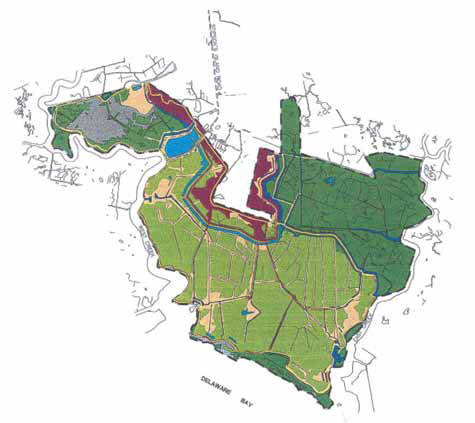
Before restoration (1995)
Before restoration, Spartina vegetation flourished outside the salt hay farm area, while perimeter dikes and limited tidal channels restricted favorable habitat conditions within the farmed portion of the site.
Some Phragmites vegetation was present within the farmed areas.
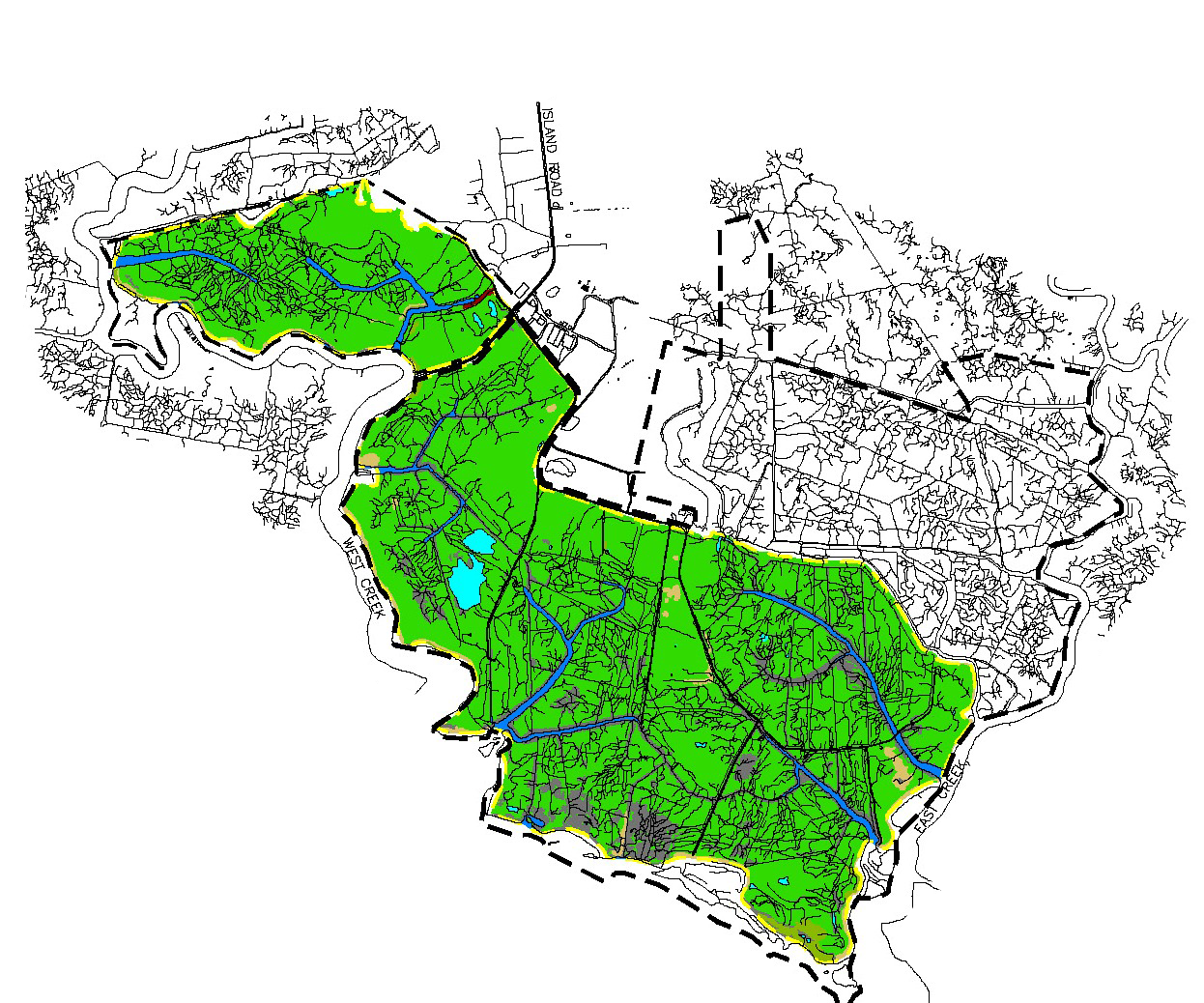
After restoration
Following dike removal and dredging of tidal channels, conditions favorable for Spartina marsh vegetation were restored. Spartina now covers much of the previously farmed area, while Phragmites has been nearly eliminated.