



Cedar Swamp Marsh Restoration

Restoring wetlands. Supporting wildlife. Strengthening our region.
This restoration site is part of PSEG’s Estuary Enhancement Program (EEP) — a long-term effort to restore and strengthen tidal wetlands along the Delaware Estuary.
Working with scientists, environmental organizations, regulators and local communities, the program focuses on restoring marsh habitat, improving aquatic ecosystems and supporting the long-term health of the estuary.
Through restoration projects like this one, the EEP helps expand habitat for fish and wildlife, encourage the return of native marsh vegetation and reconnect wetlands with natural tidal processes.
Learn more about the Estuary Enhancement Program and restoration efforts across the Delaware Estuary.
Overview
Cedar Swamp is a 1,870-acre wetland site located in New Castle County, Delaware, including 1,863 acres designated for restoration. The site is owned by DNREC and Delaware Wildlands.
Historically, the area supported hunting and a coastal recreation resort. Today, Cedar Swamp continues to support outdoor recreation, including public hunting, wildlife observation, and anchorage for commercial and recreational crabbing and fishing boats.
Before restoration began, Phragmites covered approximately 72 percent of the vegetated marsh plain, limiting the growth of native marsh vegetation.
Wetland enhancement and restoration efforts began in 1995 and were completed in 2000, helping restore ecological balance and strengthen aquatic habitat within the Delaware Estuary.
Restoration goals
Enhancement and restoration efforts focused on improving the health and resilience of the marsh ecosystem by:
- Expanding spawning and nursery habitat for aquatic species
- Controlling and reducing the invasive plant Phragmites
- Supporting the return of Spartina and other desirable marsh vegetation
- Preserving wetlands and the surrounding upland buffer
Actions taken
To achieve these goals, the Estuary Enhancement Program (EEP) implemented targeted restoration strategies across the site, including:
- Herbicide treatments applied by aerial, ground and boat methods to control Phragmites and support the re-establishment of Spartina
- Studying seven test areas to evaluate the effectiveness of different treatments for Phragmites control and elimination
These science-based actions helped improve marsh conditions and create opportunities for native vegetation to return.
Restoration results
Through these restoration efforts:
- 1,863 acres of aquatic habitat were restored within the Delaware Estuary
The restored wetlands now provide expanded habitat for aquatic species and support the long-term health of the estuary ecosystem.
Public access and site enhancements
Enhancements at Cedar Swamp help support responsible recreation and long-term public use of the site. Existing improvements include:
- Parking area
- Boat ramp
These features provide access for visitors and those using the surrounding waterways for fishing, crabbing and wildlife observation.
-
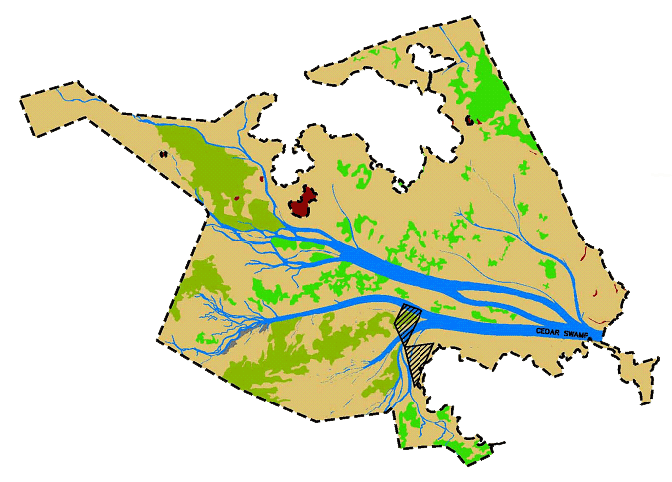
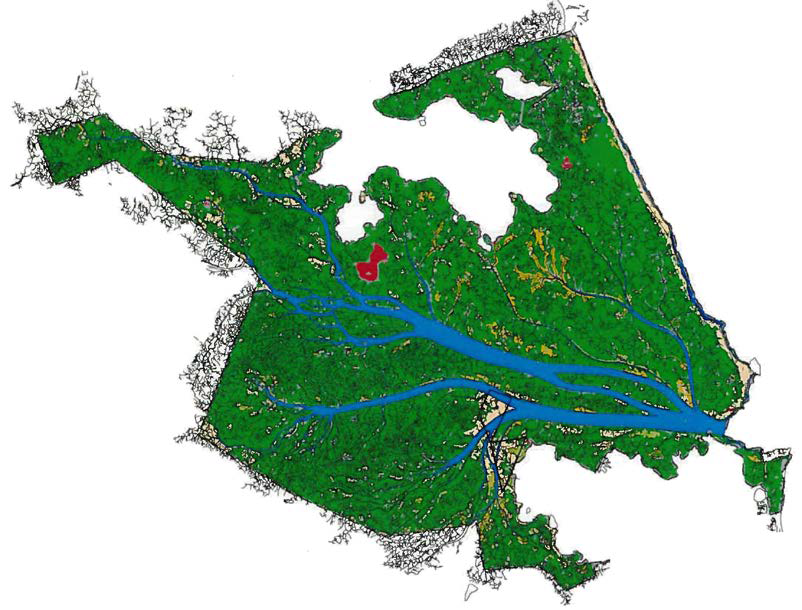
Prior to restoration activities, Phragmites dominated the wetland site. Following herbicide treatments, the population declined rapidly. As Phragmites decreased, Spartina re-vegetated the marsh, helping restore a healthier plant community.
Before restoration
Before restoration efforts began, the site was largely dominated by Phragmites, shown in tan on the vegetation map. Only scattered patches of Spartina and other desirable marsh vegetation were present.
After restoration
Following implementation of restoration controls, Phragmites populations declined significantly and the marsh is now largely dominated by Spartina, indicating the recovery of native marsh vegetation.