



Cohansey River Marsh Restoration

Restoring wetlands. Supporting wildlife. Strengthening our region.
This restoration site is part of PSEG’s Estuary Enhancement Program (EEP) — a long-term effort to restore and strengthen tidal wetlands along the Delaware Estuary.
Working with scientists, environmental organizations, regulators and local communities, the program focuses on restoring marsh habitat, improving aquatic ecosystems and supporting the long-term health of the estuary.
Through restoration projects like this one, the EEP helps expand habitat for fish and wildlife, encourage the return of native marsh vegetation and reconnect wetlands with natural tidal processes.
Learn more about the Estuary Enhancement Program and restoration efforts across the Delaware Estuary.
Overview
The Cohansey River Watershed Phragmites-dominated Wetland Restoration Site spans 1,055 acres in Fairfield and Hopewell Townships, Cumberland County, New Jersey. Within this area, approximately 910 acres of previously impounded coastal marsh, along with adjacent freshwater wetlands and upland areas, were targeted for restoration.
Wetland enhancement and restoration efforts began in 1996 and concluded in 1999, helping restore the ecological balance of this important Delaware Estuary watershed.
Restoration goals
Enhancement and restoration efforts focused on strengthening the health and productivity of the marsh ecosystem by:
- expanding spawning and nursery habitat for aquatic species
- controlling and reducing the invasive plant Phragmites
- encouraging the return of Spartina and other desirable marsh vegetation
- preserving wetlands and the surrounding upland buffer
Actions taken
To achieve these goals, the Estuary Enhancement Program implemented targeted restoration strategies, including:
- Herbicide treatments applied by aerial, ground and boat methods to control Phragmites and support the re-establishment of Spartina
- studying two test areas to evaluate the effectiveness of different treatments for Phragmites control and elimination
These efforts helped improve marsh conditions and support the return of native plant communities.
Restoration results
Through these restoration actions:
- 910 acres of aquatic habitat were restored within the Delaware Estuary
- restoration goals for the site were successfully achieved in 2004
The restored wetlands now provide expanded habitat for aquatic species and support the ecological health of the Cohansey River watershed.
Public access and environmental education
In addition to ecological restoration, improvements were made to support environmental education and responsible public access, including:
- outdoor classroom
- nature trail
- boardwalk
- boat ramp
- parking area
These features provide opportunities for visitors, educators and researchers to experience and learn from the restored marsh environment.
-
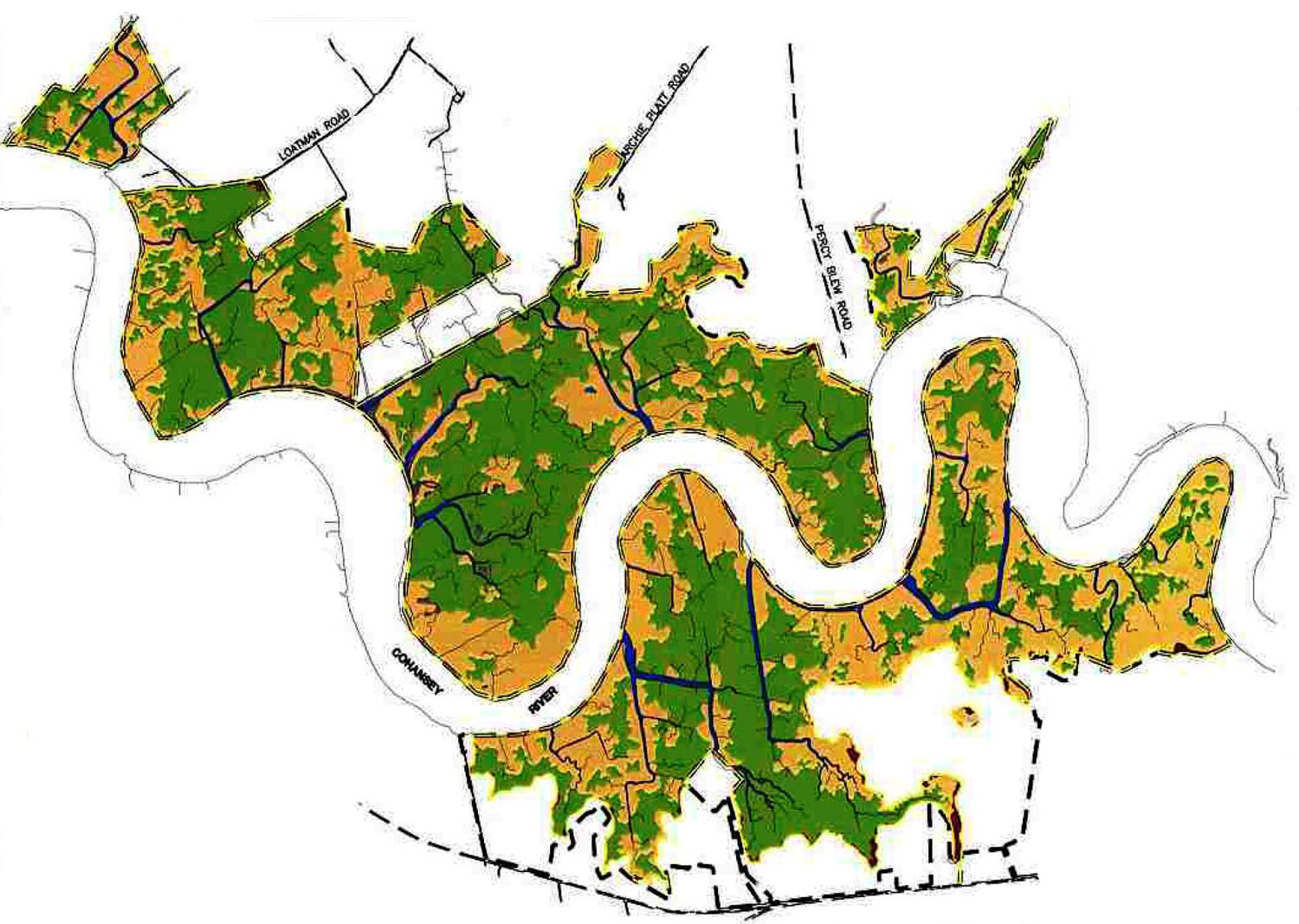
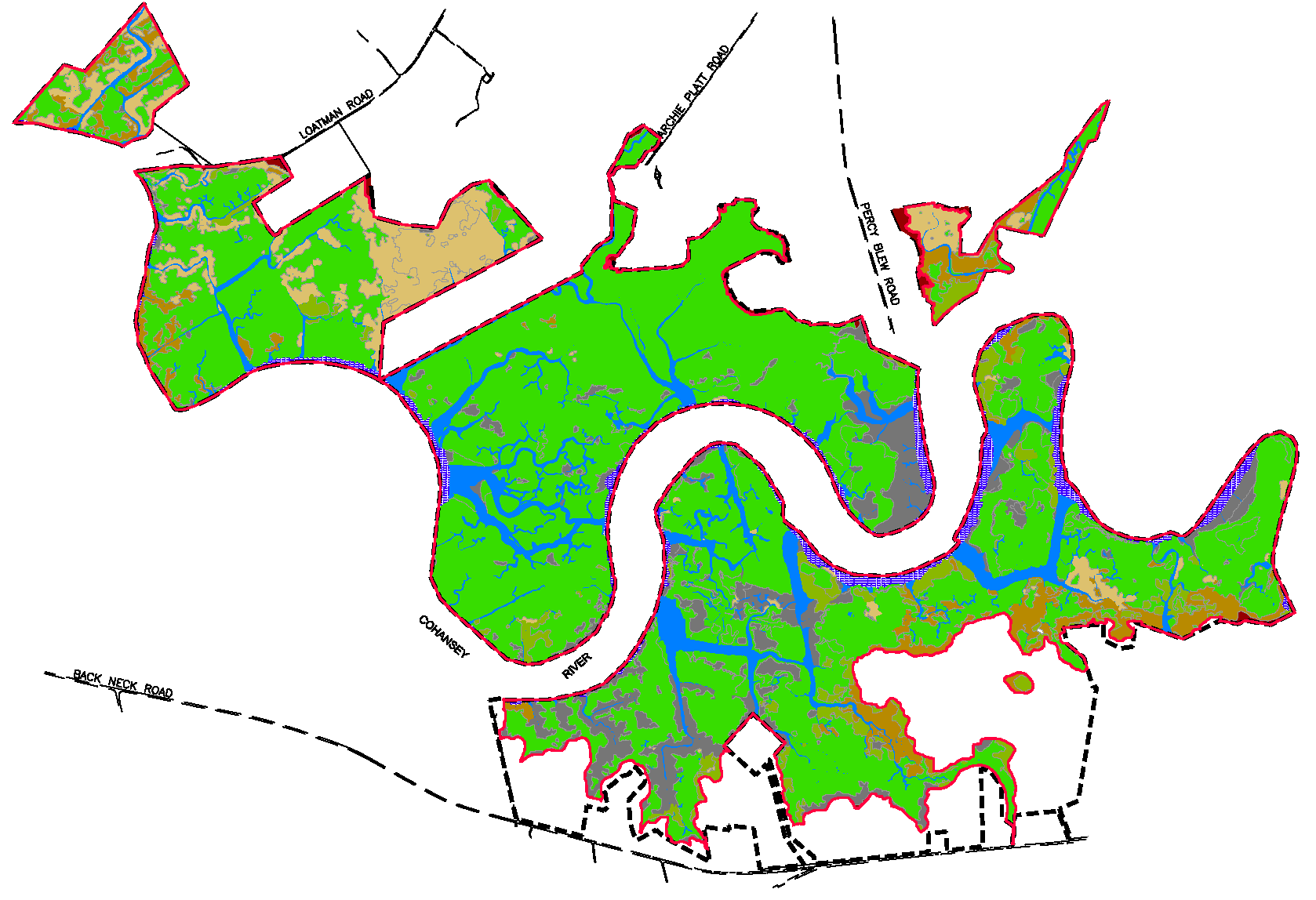
Prior to restoration, Spartina and Phragmites co-dominated the wetland. Following herbicide treatment and removal of dead plant material, the Phragmites population declined significantly and tidal flushing improved. As a result, Spartina now dominates the wetland, reflecting the return of a healthier marsh ecosystem.
Before restoration (1996)
Before restoration activities began, the marsh contained similar abundances of Phragmites (tan shaded areas) and Spartina (green shaded areas), indicating a co-dominance of invasive and native vegetation.
After restoration
Following implementation of restoration controls, Phragmites coverage declined dramatically while Spartina expanded into areas previously dominated by Phragmites, reflecting the recovery of native marsh vegetation.